Batch and seal checks
How to Verify an Apex Boost Bottle
To verify an Apex Boost bottle, check that the induction seal is intact, read the lot code on the base of the bottle, compare the label against the panels photographed on this site, and call the order desk with the lot number. Stock sold here carries lot APE-26/AP-4253 with the CoA reference APE-4253-26-AP.
The five checks
Check the safety seal
The label says: do not use if the safety seal is damaged or missing. That is the first check and the only one that is a hard stop.
Read the lot code on the base
Genuine stock from this site carries lot APE-26/AP-4253. The lot and a best-before date are printed on the base of the bottle when the bottle shows them.
Compare the label with the photographs here
Both panels are published on this site. Check the 838 mg blend total, the six botanical names, and the distributor line.
Call the desk with the lot number
The order desk, listed in the site footer. The desk can match a lot to a shipment.
Keep the order email
The order ID is what ties your bottle to a record.
What is printed where
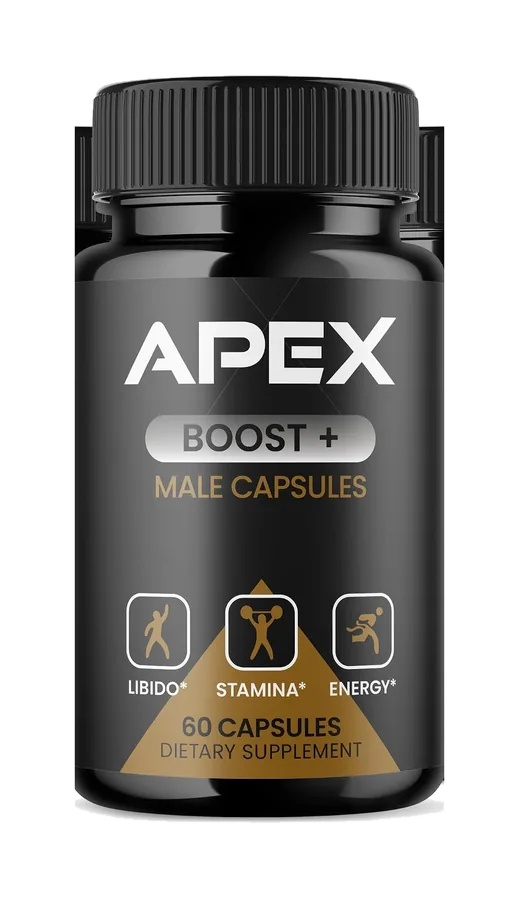
| Where | What it says |
|---|---|
| Front panel | APEX / BOOST + / MALE CAPSULES, the three claim icons, 60 CAPSULES, DIETARY SUPPLEMENT |
| Side panel | Suggested use, caution, keep out of reach of children, seal warning, storage, the 60-day open-bottle note and the FDA statement |
| Back panel | Supplement Facts: 2 capsules, 30 servings, Proprietary Male Support Blend 838 mg, six herbs, inactive ingredients, distributor |
| Bottom of the side panel | Third Party Tested, US flag, GMP Certified |
| Base of the bottle | Lot number and, where the bottle shows it, a best-before date |
If any of those is missing on a bottle you have been sold, that is worth a phone call before you take anything.
Lot and CoA reference
| Reference | Value | What it is |
|---|---|---|
| Lot | APE-26/AP-4253 | The production batch code printed on the bottle base |
| CoA reference | APE-4253-26-AP | The reference the seller uses for the batch's certificate of analysis |
What we hold and what we do not
We have the CoA reference. We do not have the CoA document itself, and we are not going to publish a summary of a document we have not read. If you need the certificate, ask the order desk for it and tell them the reference above.
What we could not give you
- The certificate of analysis document behind reference APE-4253-26-AP.
- The name of the lab behind the Third Party Tested mark on the bottle.
- A best-before date, which is printed on the bottle base rather than on anything we were sent.
- A serial-number or QR verification system. This product does not appear to have one.
Those four sit on the missing list with everything else we were not given. When any of them arrives, the page changes and the Last updated date moves.
If a bottle looks wrong
Broken or missing seal
Do not take it. The label is explicit. Call the order desk.
A lot code you do not recognise
Call the desk with the code. Lots change over time, so a different code is not automatically a problem.
A label that differs from the photographs here
Send a photograph to the website desk. If the label has changed, our pages need updating too.
Verification questions
How do I know my Apex Boost is genuine?
Check the intact safety seal, the lot code on the base, and the label against the panels photographed on this site, then call the order desk with the lot number.
What is the current lot number?
APE-26/AP-4253, with the CoA reference APE-4253-26-AP.
Where is the expiry date?
Printed on the base of the bottle where the bottle shows it. We were not given a date to publish.
Can I see the certificate of analysis?
We hold the reference, not the document. Ask the order desk for it and quote APE-4253-26-AP.
Is there a QR code to scan?
Not on anything we were given.
What does Third Party Tested mean here?
That a lab outside the manufacturer tested the batch. The label does not name the lab, so we cannot either.
What a certificate of analysis contains
Since we quote a CoA reference and not a CoA, it is worth explaining what the document would tell you if you got hold of it. Then you know what to ask for and what an unhelpful answer looks like.
| Section | What it reports | Why it matters |
|---|---|---|
| Identity | That the herb in the powder is the herb on the label | Substitution is the most common adulteration in botanical supplements |
| Potency or assay | The measured level of a marker compound | The only way to confirm a standardisation claim |
| Heavy metals | Lead, arsenic, cadmium, mercury | Root and bark material concentrates what is in the soil |
| Microbiology | Total plate count, yeast, mould, pathogens | Basic hygiene of the batch |
| Residual solvents | What was left from the extraction | Relevant for solvent-extracted botanicals |
| Batch and date | Lot number, manufacture date, expiry | The link between the paper and your bottle |
When you ask a seller for a CoA, ask for the one matching the lot code on your bottle. A certificate for a different batch is a document about somebody else's bottle.
The five-second check at the kitchen counter
Cap seal
Twist the cap. The ring should break. Under it, a foil seal across the mouth of the bottle should be intact and unbroken.
Label print quality
Genuine label printing is sharp at the small text. Blurred botanical names or a misaligned panel edge is worth a photograph.
Capsule appearance
The capsules in this product are white and opaque. A bottle of mixed colours or sizes is not right.
Smell
Herbal extracts smell herbal. A strong chemical or rancid smell means stop and call.
Count
Sixty capsules. Not a precise count by hand, but a bottle that looks half empty is worth weighing against the label.
None of these proves authenticity on its own. Together they catch the obvious problems, and the order desk handles everything they do not.
What the lot number is actually for
Most people meet a lot number only when something goes wrong, which is a shame, because it is the one piece of information that ties an individual bottle to a moment in a factory.
- Traceability. A lot identifies the production run. If a problem is found in a run, the lot is how anyone knows which bottles are affected.
- Matching a certificate. A certificate of analysis belongs to a batch. Without the lot code, a certificate is a document about somebody else's product.
- Age. The lot, together with any best-before date on the base, tells you roughly how long the bottle has existed.
- Support. The order desk can match a lot to a shipment, which turns "my bottle looks odd" into a question with an answer.
Which is why the advice on this page is to keep the bottle rather than decanting capsules into a pill organiser and recycling it. Current stock sold through this site is lot APE-26/AP-4253 with the certificate reference APE-4253-26-AP.
If you bought elsewhere and want it checked
The checks on this page work on any bottle, whoever sold it. Seal intact, lot code present, label matching the panels published here, capsules white and uniform. Those four cost you nothing and catch most problems.
What we cannot do is vouch for stock we did not ship or refund an order we did not take. If a bottle bought elsewhere fails one of these checks, the seller who took your money is the one who owes you an answer, and the marketplace it was listed on will usually have its own dispute process. Send us a photograph through the website desk anyway if the label differs from ours, because a changed label means our pages need updating.
In one sentence
Seal intact, lot code on the base, label matching the panels published here, capsules white and uniform, and an order desk that can match your lot to a shipment — five checks, about a minute, and worth doing before the first capsule rather than after the last one.
Check the bottle, then start the 60 days
Seal intact, lot code readable, label matching the photographs here.
60-day money-back guarantee · Questions first? The contact page lists both desks