Label reading
Apex Boost Ingredients: The 838 mg Blend, Line by Line
Quick answer: Apex Boost ingredients are six herbs in one Proprietary Male Support Blend of 838 mg per two capsules. In weight order, they are tribulus, horny goat weed, longjack, ginseng, ashwagandha and yohimbe. The label does not publish the amount of each herb. The three inactive ingredients are silica dioxide, rice flour and magnesium stearate. Because yohimbe is in the blend, ask a doctor first if you take a prescription or have a heart condition.
What does the Supplement Facts panel say, line by line?
Start with the panel, because it is the only part of this story that was printed by the maker. Read it like a receipt. Each line has a job.
| Line on the panel | What it says | What it tells you |
|---|---|---|
| Serving Size | 2 Capsules | One serving is two capsules |
| Servings Per Container | 30 | A 60-capsule bottle lasts about a month |
| Proprietary Male Support Blend | 838 mg, with a footnote | The total weight of all six herbs together |
| Footnote | Daily Value not established | No official daily intake exists for this blend |
| Inactive Ingredients | Silica Dioxide, Rice Flour, Magnesium Stearate | Flow agent, filler and lubricant |
| Distributed by | Flex University, San Diego CA, 82121 | The distributor named on the bottle |

Key facts
- One active line: Proprietary Male Support Blend, 838 mg per serving of 2 capsules.
- Six herbs, printed in descending order of weight: tribulus, horny goat weed, longjack, ginseng, ashwagandha, yohimbe.
- Amount of each herb: not published. Extract ratios and standardisation: not published.
- Inactive ingredients: silica dioxide, rice flour, magnesium stearate.
- The capsule shell material is not published.
- Price is shown at checkout. The guarantee is 60 days from delivery on orders placed through this site.
What is a proprietary blend, and why does it matter?
A proprietary blend is a legal label format. The maker prints one total weight and lists the ingredients underneath, in order of weight, without naming each amount. The FDA labelling guide is where that rule lives. It is not a trick, and it is not a violation.
What it costs you is the ability to compare one ingredient with one study. Research papers dose one herb at a time. When a label groups six herbs under one number, no published trial can be matched to it. That is the main reason we say the label cannot show whether any herb reaches a studied dose.
What does simple arithmetic tell you about 838 mg?
You cannot learn the real split, but you can learn the limits. These numbers come straight from the panel and plain division.
| Measure | Working | Result |
|---|---|---|
| Per serving | Printed on the panel | 838 mg |
| Per capsule | 838 divided by 2 | 419 mg |
| Per herb, if split evenly | 838 divided by 6 | about 140 mg |
| Per capsule, per herb, if even | 419 divided by 6 | about 70 mg |
| Per bottle | 838 times 30 servings | 25,140 mg |
The even split is almost certainly not real. The first herb on the list holds the biggest share, and the last holds the smallest. So some herbs sit above 140 mg and some sit well below it. Compare that average with published trial ranges: tribulus 250-1,500 mg a day, ginseng 200-400 mg, ashwagandha 250-600 mg. An even split would place most of them under the studied amounts. The real split is unknown.
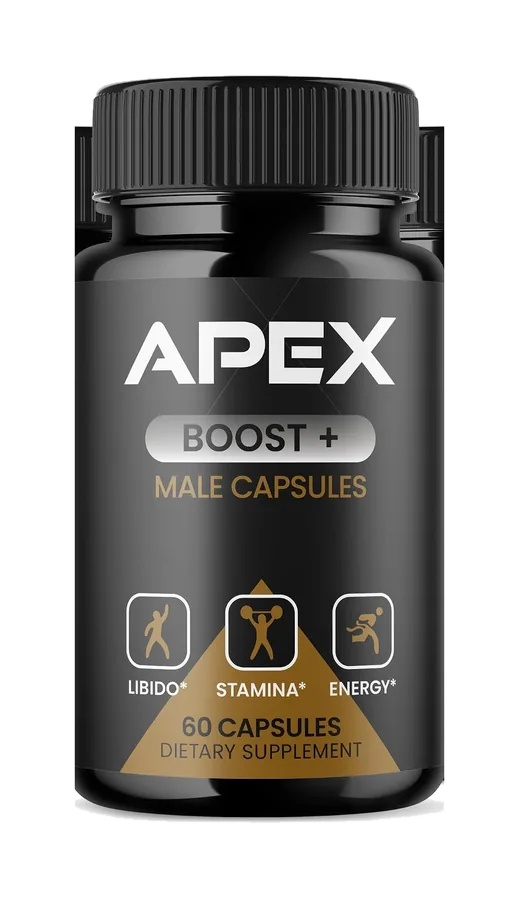
Prefer to compare the panel with a real bottle? The checkout page shows the price and the written guarantee.
Disclosure: Apexboost earns a commission on orders placed through this checkout link. It does not change the price you pay.
What does the order of the six herbs tell you?
Under the labelling rules, the order is the only quantity clue you get. First means heaviest. Last means lightest.
- Tribulus terrestris. The largest share of the blend.
- Horny goat weed (Epimedium sagittatum). Second largest.
- Longjack (Eurycoma longifolia). Middle of the list.
- Panax ginseng. Below longjack.
- Ashwagandha (Withania somnifera). Second smallest.
- Yohimbe (Pausinystalia yohimbe). The smallest share.
Two readings come out of that. The good one: the herb with the most serious safety record, yohimbe, is the smallest. The less good one: the herb with the clearest evidence, ashwagandha, is second smallest, and the largest share goes to tribulus, which NIH reports showed no effect on strength, lean body mass or sex hormone levels. Smallest does not mean small, though. Without an amount, nobody can say.
What are the inactive ingredients for?
Silica dioxide
An anti-caking agent. It keeps powder flowing so each capsule fills evenly.
Rice flour
A filler. It takes up room that the actives do not. Avoid this product if you avoid rice.
Magnesium stearate
A lubricant. It stops powder sticking to the capsule machine.
None of these is an active ingredient. They help the powder fill the capsules evenly. That is normal in capsule making, and it is why the inactive list is short and plain.
How does a blend compare with other products?
This is a comparison of formats, not of brands. We have not tested other products, so we do not rank them.
| Question | Proprietary blend (this label) | Fully disclosed formula |
|---|---|---|
| Are amounts printed? | No, one total only | Yes, each ingredient in mg |
| Can you match it to a study? | No | Yes |
| Usually how many capsules a day? | 2 on this label | Often more, to fit studied doses |
| What you gain | A simple routine and a long refund window | Numbers you can check |
If a printed milligram for every herb matters to you, buy a product that prints them. If you want a simple twice-daily routine and can live with the gap, a blend is a fair purchase. Know the trade before you pay.
What does the label not tell you?
- The milligrams of each herb.
- The extract ratio, such as 10:1 or 4:1, for any herb.
- Standardisation, such as a yohimbine percentage in the yohimbe.
- Whether the capsule shell is gelatin or vegetarian.
- The name of the lab behind the Third Party Tested mark.
- The certificate document behind reference APE-4253-26-AP.
None of these gaps is illegal, and none is unusual for a blend. Each one is simply a question that stays open until the maker or distributor answers it.
Where do these facts come from?
The labelling rule comes from the FDA guide below. The herb findings come from NIH and NCCIH. The panel itself is read from the bottle.
- U.S. Food and Drug Administration (2026). Dietary Supplement Labeling Guide.
- Office of Dietary Supplements, National Institutes of Health (2026). Dietary Supplements for Exercise and Athletic Performance: Health Professional Fact Sheet.
- NCCIH, National Institutes of Health (2026). Yohimbe: Usefulness and Safety.
Frequently asked questions
What are the ingredients in Apex Boost?
One proprietary blend of 838 mg per serving, holding tribulus, horny goat weed, longjack, ginseng root, ashwagandha and yohimbe extracts. Inactive ingredients are silica dioxide, rice flour and magnesium stearate.
How much of each herb is in Apex Boost?
Not published. The label prints only the 838 mg total and lists the herbs in order of weight.
Does Apex Boost contain yohimbe?
Yes. Yohimbe extract is the sixth and last herb in the blend, so it is the smallest share. It still carries the strongest cautions of the six.
Is the capsule shell vegetarian?
Not published. The label names three inactive ingredients and does not describe the shell.
Does Apex Boost contain caffeine?
No caffeine is listed on the label. Yohimbe is stimulant-like and sits at the end of the blend.
Why does the label say Daily Value not established?
Because no official daily intake has been set for this blend of herbs. The footnote is the standard way to say so.
Our view
The Apex Boost label is honest about what it prints and silent about what it hides. The panel is clean, the botanical names are there, the serving maths closes, and the order of herbs is correct. What is missing is the one thing that would let you judge the formula: the amount of each herb.
So read it as a routine product, not as a dose. If you can accept that, the rest of the label is clear and checkable. If you cannot, say no now. It is a better decision than saying yes and wondering in week three.
If a simple blend suits you, the checkout page shows today's price and the refund terms.
Disclosure: Apexboost earns a commission on orders placed through this checkout link. It does not change the price you pay.
Last updated . Medically reviewed by Dr. Jonathan Clavell, MD, Physician. This page is general information. It is not medical advice. Apex Boost is a dietary supplement. It is not FDA approved, and no supplement is.
Keep reading